
Punjab Floods 2025 Death Toll Nears 100 Around 4.5 Million People Affected
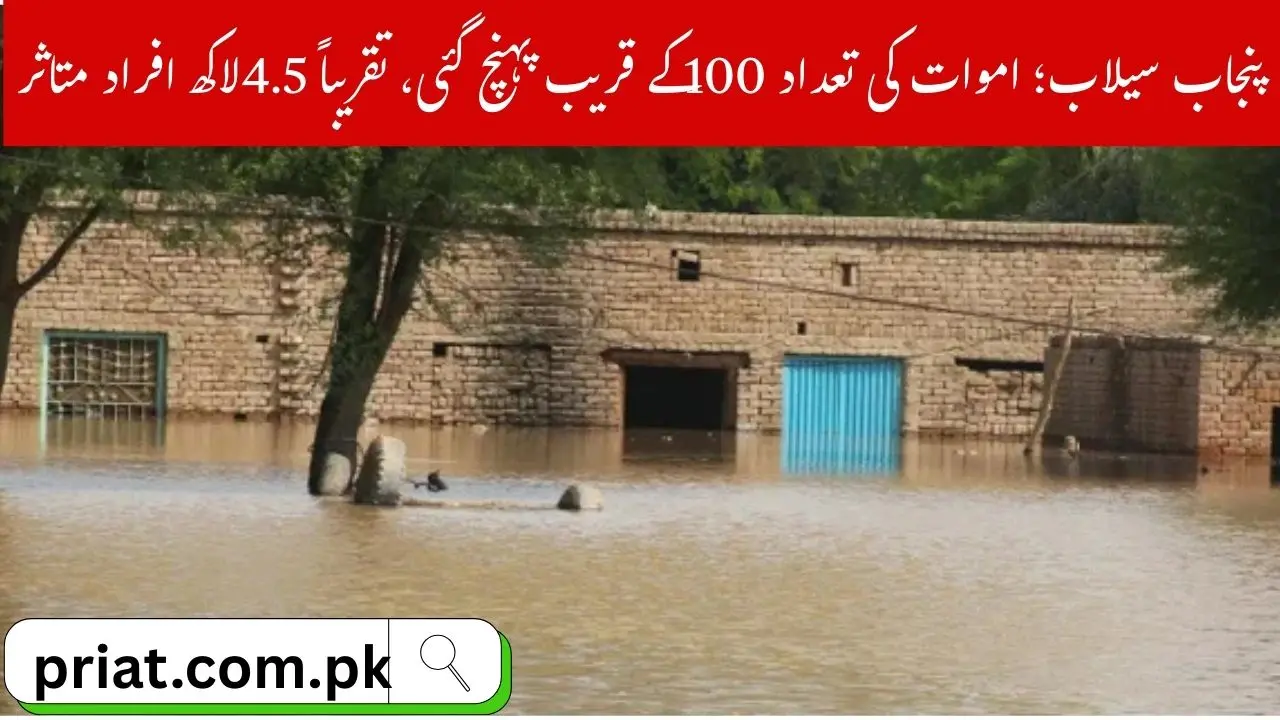
The Punjab Floods 2025 Death Toll Nears 100 Around 4.5 Million People Affected has brought another devastating natural disaster to Pakistan, as Punjab is currently facing one of the worst floods in its history. According to the Provincial Disaster Management Authority (PDMA), nearly 97 lives have been lost so far and close to 4.5 million people have been directly affected. With heavy rains, overflowing rivers, and nearly 4,500 villages inundated, the Punjab Floods 2025 are not only a humanitarian emergency but also a critical test for the province’s disaster preparedness and resilience.
This article takes a closer look at the scale of the damage, the impact on communities, relief efforts, government response, and the risks that still lie ahead.
Humanitarian Impact of the Punjab Floods 2025:
The human toll of the floods is immense. So far, 97 people have lost their lives, and hundreds more have sustained injuries. However, the larger crisis lies in displacement and disruption. Over 4.598 million individuals have been affected, and 2.451 million people have been evacuated from their homes to safer locations.
For many families, this means leaving behind not just their houses but also their livelihoods, farmlands, and livestock. The floodwaters have contaminated drinking water supplies and damaged essential infrastructure like schools, hospitals, and roads. This makes recovery far more challenging, as entire communities are struggling to access food, medicine, and shelter.

Areas Most Affected:
Punjab’s geography, with its extensive river system, makes it particularly vulnerable to flooding. This year, the most severe damage has been caused by the Chenab, Sutlej, and Ravi rivers.
- Chenab River: Over 2,335 villages submerged.
- Sutlej River: Around 672 villages impacted.
- Ravi River: Nearly 1,482 villages flooded.
Altogether, 4,489 villages (moza) have been severely affected. Agricultural lands, which form the backbone of Punjab’s economy, have been washed away. Standing crops, especially rice, maize, and sugarcane, have suffered widespread damage, creating fears of food shortages and economic hardship in the coming months.


Relief and Rescue Operations:
Authorities, along with local and international NGOs, have been working tirelessly to mitigate the crisis. According to Relief Commissioner Nabeel Javed:
- 396 relief camps have been established across Punjab.
- 490 medical camps are providing healthcare services to flood-affected families.
- To support livestock owners, 405 veterinary camps have been set up.
- Over 1.9 million animals have been rescued and moved to safer locations.
These efforts have undoubtedly saved countless lives, but challenges remain. Many areas are still cut off due to damaged roads and bridges, making it difficult for aid to reach people in need. Moreover, the sheer scale of the disaster means that resources are stretched thin, and much more assistance is required.
Check Also: Gold Price in Pakistan Rises Again After Brief Pause

Dams and Water Levels Raise Alarming Concerns:
The floods have also highlighted the pressure on dams and reservoirs in both Pakistan and India. As of now:
- Mangla Dam is at 93% capacity.
- Tarbela Dam is completely full at 100%.
- Across the border, Bhakra Dam in India is 88% full.
- Pong Dam has reached 94% capacity.
- Thein Dam is at 89%.
These dangerously high water levels pose the risk of further flooding, especially if heavy rains continue in the coming weeks. Experts warn that a sudden release of water from these dams could worsen the situation downstream, causing additional displacement and destruction.

Government Response and Compensation Plans:
The Chief Minister of Punjab has directed authorities to prioritize relief operations and ensure that affected citizens are compensated for their losses. Emergency funds are being allocated to provide immediate financial support to flood victims. In addition, special attention is being given to rebuilding damaged infrastructure such as roads, schools, and healthcare facilities.
However, long-term rehabilitation remains a pressing concern. Experts emphasize that while relief camps offer temporary shelter, a comprehensive recovery strategy is needed to restore livelihoods and prevent future disasters of this scale.
Read Also: Punjab Ration Card Phase 2 Program 2025 Step by Step Guide
Economic and Social Consequences:
The Punjab Floods 2025 are not just a humanitarian crisis—they also carry significant economic consequences. Punjab is Pakistan’s agricultural hub, and with thousands of acres of farmland destroyed, the nation is likely to face food shortages, price inflation, and reduced export revenues.
On a social level, displacement of millions of people means a growing burden on urban centers and relief shelters. Access to clean water, proper sanitation, and medical care remains a challenge. Additionally, the psychological impact on flood victims—particularly children—cannot be overlooked. Trauma, loss, and uncertainty are shaping the lives of millions in Punjab.
Future Risks and Warnings:
Meteorologists warn that the risk is far from over. With dams already near full capacity and the possibility of further rainfall, authorities remain on high alert. Climate experts note that such extreme weather events are becoming more frequent due to climate change and poor water management practices.
Unless proper flood management systems, early warning mechanisms, and stronger embankments are established, Punjab may continue to face similar disasters in the future.
Global and Local Support Needed:
While the government of Punjab is doing its best to manage the crisis, the scale of the floods demands broader support. NGOs, international relief agencies, and donor organizations are being called upon to step in with additional aid, including food, medical supplies, and shelter materials.
Local communities, too, are showing resilience. Volunteers are stepping up to provide food and transport for displaced families. Social media campaigns are raising awareness and collecting donations for victims. Yet, the needs remain massive compared to the available resources.
Read More: AKF Punjab Business Loan Phase 2 Application Fee and Security Requirements 2025
Conclusion – Punjab Floods 2025 Death Toll Nears 100 Around 4.5 Million People Affected:
The Punjab Floods 2025 serve as a stark reminder of how vulnerable communities are to natural disasters in South Asia. With nearly 100 lives lost and 4.5 million people affected, the human suffering is immense. Relief efforts are ongoing, but the challenges of displacement, food security, and long-term rehabilitation loom large.
To move forward, Pakistan must invest in better disaster preparedness, climate resilience, and water management. At the same time, global solidarity is crucial to help Punjab’s people recover from one of the worst humanitarian crises in recent memory.