MF Condition Met: Pakistan Government Ends Wheat Procurement & Support Price System
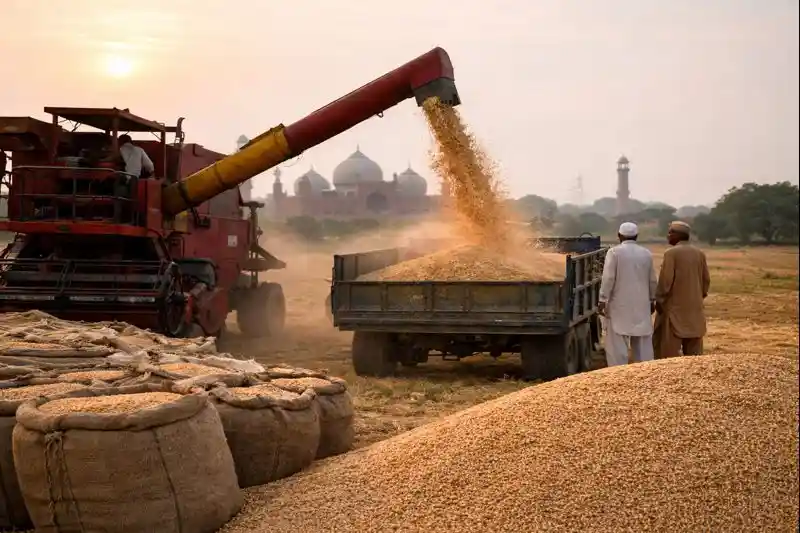
Pakistan has officially met another major condition of the International Monetary Fund (IMF) program by exiting the wheat procurement system. The federal government will no longer purchase wheat directly from farmers, and the long-standing wheat support price system has also been abolished. This is one of the biggest structural policy changes in the country’s food and agriculture sector in recent years.
According to reports, both the federal and provincial governments will now maintain only limited wheat reserves for emergency situations. The total annual wheat storage cap has been fixed at 6.2 million metric tons, replacing the massive state-controlled stockpiling system that has existed for decades.
Wheat Procurement Shifted to Private Sector
Under the new arrangement, the government will not procure wheat on its own. Instead, a private company will handle wheat procurement on behalf of the federation and all provinces. This company will also be responsible for arranging financing and storage facilities.
Previously, the government used to provide bank guarantees for wheat purchases, while PASSCO and provincial food departments carried out direct procurement. That entire model has now ended.
New Wheat Stock Responsibility Distribution
Under the new wheat stock management framework, the responsibility has been divided between the federation and provinces as follows:
Federal and Provincial Wheat Stock Limits
- Federal Government: 1.5 million metric tons
- Punjab Government: 2.5 million metric tons
- Sindh Government: 1 million metric tons
- Khyber Pakhtunkhwa: 0.75 million metric tons
- Balochistan: 0.5 million metric tons
These stocks will only be maintained for strategic and emergency purposes, not for routine procurement or price stabilization.

IMF Strictly Prohibits Wheat Support Price
The IMF has clearly instructed Pakistan that the government cannot fix a wheat support price anymore. For decades, the wheat support price was used to protect farmers and stabilize the wheat sector. However, IMF believes that such subsidies and state intervention distort markets and create fiscal burdens.
Now, wheat prices in Pakistan will be aligned with global market trends. International price benchmarks will be used to determine wheat pricing and market movement. This means wheat rates will fluctuate like any other commodity linked to international trade.
Massive Financial Savings Expected
According to estimates shared with the government, this policy shift will help Pakistan save almost Rs. 570 billion annually. The government earlier bore huge costs for:
- procurement financing
- interest on bank loans
- storage expenses
- transportation
- operational inefficiency losses
The Ministry of National Food Security has allocated Rs. 30 billion only for service charges to the private company handling procurement, financing and storage.
This is significantly lower than what the government used to spend.

PASSCO Debt and Financial Pressure
One of the main reasons behind IMF pushing this policy was the rising food sector circular debt. PASSCO and provincial food departments have accumulated huge debt over several years due to delayed payments, interest accumulation and mismanagement.
Reports state that food sector debt related to wheat has already reached around Rs. 270 billion. IMF demanded reforms to stop further losses and fiscal bleeding.
By shifting procurement to the private sector, the government expects to reduce borrowing, improve financial discipline, and control debt buildup.
What Does This Mean for Farmers?
This policy change brings significant implications for Pakistani farmers.
Previously, the government guaranteed a minimum wheat price through the support system. Even if market prices dropped, farmers were protected. Now, as prices become market-based:
- Farmers may face price uncertainty
- Market forces will determine earnings
- Private buyers may dominate procurement
- Farmers will need stronger market awareness
Some analysts believe this will push farmers toward efficiency, modern farming and quality improvement, while others fear farmers may be exploited by middlemen and private cartels.
Impact on Flour Prices and Public
Another major public concern is flour prices. Even before this decision, flour prices had increased in many parts of the country despite reduction in wheat issue prices.
Without government price control and subsidy mechanisms, flour prices may now align more directly with international market trends, currency fluctuations, and private sector decisions.
Supporters of the reform say competition may improve supply chain efficiency and stabilize prices in the long run. However, critics warn that without strict regulation, flour prices could increase sharply, affecting common citizens.
Why IMF Pushed This Condition?
IMF has long criticized Pakistan’s state-controlled wheat policy, calling it inefficient, costly and distortionary. According to IMF:
- Government spending on wheat procurement was too high
- Huge bank borrowing created fiscal pressure
- Public sector inefficiency caused wastage
- Storage losses damaged national resources
- Subsidies benefited influential groups more than poor farmers
IMF wants Pakistan to move towards a market-driven agriculture economy with limited state financial exposure. This decision reflects IMF’s broader economic reform agenda in Pakistan.
Provincial Governments Lose Major Economic Tool
For many years, wheat procurement was also a strong political and administrative tool for provincial governments, especially Punjab. It allowed them to maintain influence over farmers and price control.
With this reform:
- Provinces lose direct control
- Political influence in wheat market weakens
- Private sector gains dominance
However, provinces will still maintain emergency reserves to prevent crises.
Concerns Over Private Sector Monopoly
While the decision may look financially beneficial, experts warn that handing wheat procurement entirely to a private entity could create risks such as:
- Monopoly or cartelization
- Artificial price hikes
- Exploitation of farmers
- Food security vulnerabilities
Therefore, strong monitoring, rules, and checks will be essential to ensure fair competition and protection of both farmers and consumers.
A Major Turning Point for Pakistan’s Wheat Policy
Wheat is Pakistan’s most important staple food and a major pillar of national food security. Ending government procurement marks a historic policy shift, changing a decades-old system.
This reform will:
- Reduce government financial burden
- Change wheat market dynamics
- Increase private sector involvement
- Reshape farmer-market relationships
- Align Pakistan with global commodity systems
Whether this move benefits Pakistan or creates new challenges will depend on implementation, regulation, and market behavior in the coming months.
Conclusion – Pakistan Government Ends Wheat Procurement & Support Price System
Pakistan has successfully met another IMF condition by exiting wheat procurement and abolishing the wheat support price system. The private sector will now manage wheat buying, financing, and storage, while the government will only keep limited emergency stocks. This shift is expected to save hundreds of billions annually, reduce debt pressure, and modernize the wheat system — but it may also create uncertainty for farmers and potential risks for flour prices.
The coming months will reveal how this historic economic decision shapes Pakistan’s agriculture sector, market stability and national food security.