LESCO Faces Rs 35 Billion Electricity Loss in 2026 – NEPRA Report Reveals Massive Power Theft Crisis
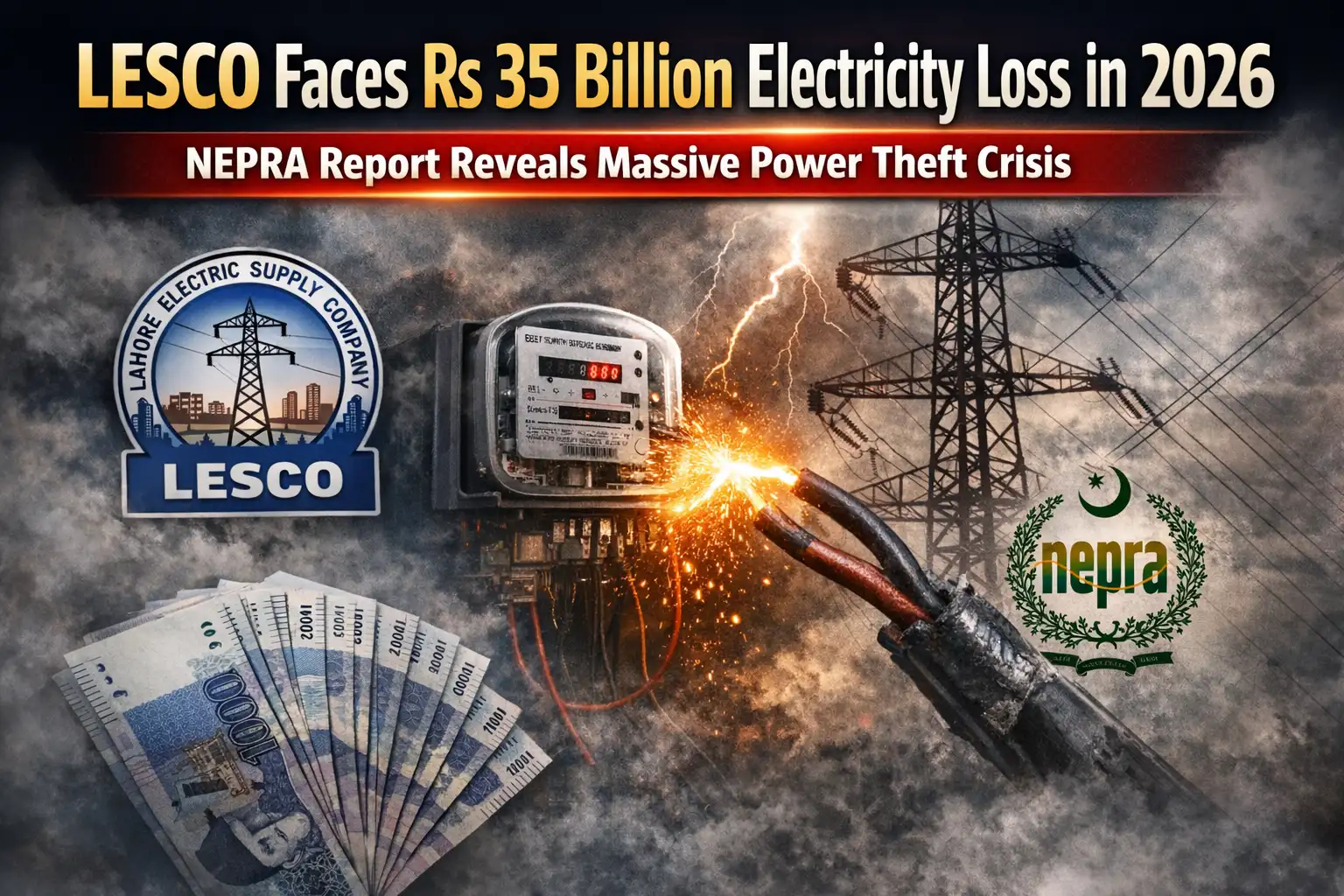
Lahore Electric Supply Company is once again in the spotlight after reports revealed that electricity worth Rs. 35.17 billion has reportedly disappeared from its system during the fiscal year 2024 to 2025. The shocking figures were highlighted in the latest Performance Evaluation Report issued by National Electric Power Regulatory Authority, raising serious concerns about power theft, transmission losses, and the worsening circular debt crisis in Pakistan.
In this detailed article, we will explain everything in simple English. We will cover LESCO losses 2026, NEPRA report findings, electricity theft in Pakistan, transmission and distribution losses, circular debt impact, LESCO load shedding schedule, and what this means for consumers.
What Is LESCO and Why It Matters in Pakistan?
LESCO is one of the largest electricity distribution companies in Pakistan. It supplies power to:
- Lahore
- Kasur
- Sheikhupura
- Okara
- Nankana Sahib
Millions of domestic, commercial, and industrial consumers depend on LESCO daily. Any financial or operational crisis directly impacts electricity bills, load shedding schedules, and economic stability in Punjab.
When electricity disappears from the system, it does not physically vanish. It means that power was generated and transmitted but was not billed or recovered properly. This leads to massive financial losses.

NEPRA Performance Evaluation Report FY 2024-25 – Key Findings
According to the Performance Evaluation Report released by NEPRA:
- Electricity worth approximately Rs. 35.17 billion was lost.
- Nearly one billion units of electricity went unaccounted for.
- LESCO failed to meet regulatory targets for reducing T&D losses.
- Technical and distribution losses exceeded allowed limits.
- Power theft and outdated infrastructure were major reasons.
NEPRA clearly stated that despite multiple enforcement campaigns, LESCO’s overall performance did not improve significantly.

What Are Transmission and Distribution (T&D) Losses?
Transmission and Distribution losses are electricity losses that occur between power generation and final consumption.
1. Technical Losses
- Old and overloaded transformers
- Weak transmission lines
- Poor grid maintenance
- Outdated infrastructure
2. Non Technical Losses
These include:
- Electricity theft
- Meter tampering
- Illegal connections
- Billing inefficiencies
- Corruption
In LESCO’s case, both technical and non technical losses are reportedly high.

Electricity Theft in Pakistan – A Major Crisis
Electricity theft remains one of the biggest problems in Pakistan’s power sector.
Common methods include:
- Direct hooking from power lines
- Meter bypassing
- Slow meters
- Fake billing adjustments
Despite LESCO’s crackdown involving:
- Daily raids
- Hundreds of arrests
- Thousands of FIR registrations
The financial damage continues.
The question many people search on Google is:
Why is electricity theft not stopping in Pakistan?
The answer lies in weak enforcement, political pressure, poor monitoring systems, and lack of modern technology in the distribution network.

How This Loss Increases Pakistan Circular Debt
Pakistan’s power sector is already facing a severe circular debt crisis. When distribution companies like LESCO fail to recover full payment:
- Power producers are not paid fully.
- Government subsidies increase.
- Debt accumulates.
- Electricity tariffs increase.
Consumers often search:
Does electricity theft increase electricity bills?
Yes. When electricity is stolen, the financial burden is shifted to honest consumers through higher tariffs.
Impact on Consumers – Why You Should Care
If LESCO continues to face massive losses:
- Electricity bills may increase.
- More load shedding could occur.
- Industrial productivity may decline.
- Inflation pressure increases.
Honest bill paying consumers suffer the most because they end up covering system inefficiencies.
LESCO Load Shedding Schedule 2026
Consumers frequently search:
- LESCO load shedding schedule today
- LESCO load shedding schedule Lahore
- LESCO power outage update
Load shedding often depends on:
- Area recovery rate
- Theft ratio
- Transformer overload
- Grid maintenance
Areas with high recovery rates usually face less load shedding, while high loss areas experience longer outages.
For updated schedules, consumers usually check:
- Official LESCO website
- Local subdivision offices
- Social media updates
Why LESCO Crackdown Is Not Fully Effective
Although LESCO has launched strict anti theft campaigns, several problems remain:
- Manual meter reading system
- Weak digital monitoring
- Political influence in certain areas
- Lack of smart grid technology
- Old transmission infrastructure
Experts believe that without modernization, enforcement alone cannot solve the issue.
What NEPRA Recommended for LESCO
NEPRA emphasized:
- Improvement in grid infrastructure
- Upgrading transformers and lines
- Installation of smart meters
- Strong accountability measures
- Better recovery monitoring
The regulator also warned that failure to control losses will continue increasing circular debt.
Outdated Infrastructure – The Silent Culprit
The report mentioned “dilapidated grid condition” as a major reason.
Many transmission lines:
- Are decades old
- Cannot handle modern electricity demand
- Frequently overload
This causes:
- Line tripping
- Voltage fluctuation
- System breakdown
- Technical losses
Infrastructure investment is expensive, but without it, losses will continue.
Can Smart Meters Reduce LESCO Losses?
Smart meters are considered a major solution worldwide.
Benefits include:
- Real time monitoring
- Remote disconnection of illegal connections
- Accurate billing
- Reduced human interference
Countries that adopted smart grids have significantly reduced electricity theft.
Pakistan is slowly moving towards digital transformation, but progress is still limited.
How This Affects Pakistan Economy
Electricity losses of Rs. 35 billion are not just numbers.
This money could have been used for:
- Schools
- Hospitals
- Infrastructure development
- Subsidies for poor families
Instead, the loss increases fiscal pressure on the national exchequer.
The power sector inefficiency directly contributes to economic instability.
Public Reaction and Media Coverage
The issue gained attention after media reports highlighted the shocking numbers.
Many citizens are asking:
- Who is responsible for LESCO losses?
- Why is no strict accountability visible?
- Will electricity prices increase again?
Public trust in distribution companies weakens when such reports surface.
What Needs to Be Done Immediately
To reduce future losses, experts suggest:
- Complete digitalization of billing system
- Nationwide smart meter installation
- Strict anti corruption policies
- Strong coordination between law enforcement and DISCOs
- Infrastructure modernization
- Public awareness campaigns
Without structural reforms, the problem may continue year after year.
Conclusion – A Warning Sign for Pakistan Power Sector
The reported Rs. 35 billion electricity loss in LESCO system is a serious warning for Pakistan’s energy sector. While enforcement actions are ongoing, structural problems such as outdated infrastructure, high theft rates, and weak monitoring systems continue to damage financial stability.
Unless major reforms are implemented, the burden will continue falling on honest consumers and the national economy.
The need of the hour is transparency, modernization, accountability, and technology driven solutions.