BISP Payments Stopped After Becoming a Tax Filer in Pakistan 2026 – Complete Reason & Solution Guide
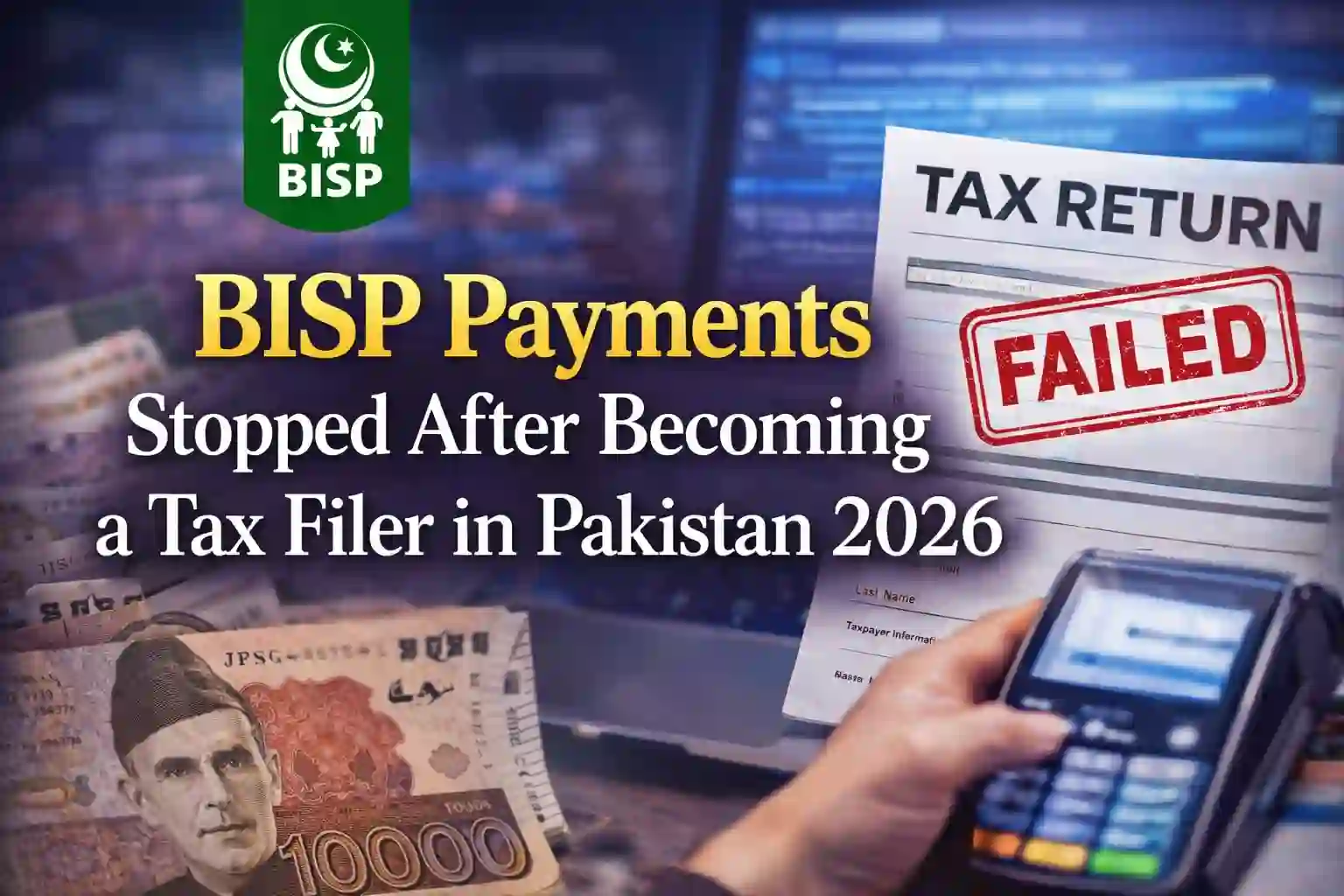
The Benazir Income Support Programme is one of the largest financial assistance initiatives in Pakistan, designed to support low-income families. However, in 2026, many beneficiaries are facing a serious issue: BISP payments stopped after becoming a tax filer.
This situation has created confusion among thousands of people who recently registered as tax filers with the Federal Board of Revenue. Many individuals are now asking why their financial assistance has been suspended and whether there is a way to restore it.
In this complete guide, you will learn the exact reasons behind payment suspension, eligibility rules, verification methods, and step-by-step solutions to resolve the issue.
What is BISP and How It Works in Pakistan 2026
The Benazir Income Support Programme is a government initiative that provides quarterly financial assistance to deserving families. The program mainly targets:
- Low-income households
- Widows and unemployed individuals
- Families below the poverty score threshold
Payments are distributed through systems like:
- 8171 Web Portal
- Designated payment centers
- Bank transfers and biometric verification
Eligibility is determined through the National Socio-Economic Registry survey and NADRA data verification.
Why BISP Payments Stopped After Becoming a Tax Filer in Pakistan
One of the major reasons behind payment suspension is change in financial status. When a person becomes a tax filer, it signals to the system that their income level may have improved.
Key Reasons Include:
- Registration in FBR as a tax filer
- Increase in declared income
- Updated financial records in NADRA
- Improved poverty score in NSER survey
- Ownership of assets or business registration
The system automatically flags such individuals as potentially ineligible, which leads to suspension of payments.
How Being a Tax Filer Affects BISP Eligibility Criteria
BISP strictly follows a poverty-based eligibility model. If your financial status improves, your eligibility may be removed.
Main Eligibility Factors:
- Poverty score below a specific threshold
- No significant property ownership
- No registered business income
- Limited bank account activity
When you become a tax filer:
- Your financial transparency increases
- Income details become visible to authorities
- Your poverty score may increase
This results in automatic disqualification or temporary suspension.
Common Scenarios Where BISP Payments Are Stopped
Many people assume that becoming a filer automatically disqualifies them. However, that is not always the case. Payments may stop due to different scenarios:
1. Incorrect Data Update
Sometimes systems incorrectly update your income status.
2. Temporary Verification Hold
Your account may be under review after becoming a filer.
3. NSER Survey Not Updated
If your data is outdated, your eligibility may not reflect your actual financial condition.
4. Asset Misclassification
Small assets or minor income may be wrongly categorized as high income.

How to Check BISP Payment Status After Becoming a Tax Filer
You can easily verify your status using official methods:
Method 1: 8171 Web Portal
- Visit the official portal
- Enter your CNIC number
- Check eligibility and payment status
Method 2: SMS Service
- Send your CNIC to 8171
- Receive eligibility confirmation
Method 3: BISP Office Visit
- Visit nearest center
- Request manual verification
Step-by-Step Solution if BISP Payments Are Stopped in 2026
If your payments have stopped, follow these steps to resolve the issue:
Step 1: Verify Your Eligibility
Check your status through 8171 portal or SMS.
Step 2: Update NSER Survey
Visit nearest BISP center and request a fresh survey.
Step 3: Provide Correct Income Details
Ensure your income records are accurate and not overstated.
Step 4: Submit Appeal
File a complaint or appeal if you believe the suspension is incorrect.
Step 5: NADRA Data Correction
Update your family and financial data if there are errors.
Step 6: Wait for Re-verification
Authorities will review your case and restore payments if eligible.
Can You Still Receive BISP Payments After Becoming a Tax Filer
Yes, in some cases, you can still receive payments if:
- Your income remains below the poverty threshold
- You are a filer for compliance but not financially stable
- Your NSER data confirms low-income status
Being a filer does not always mean you are wealthy. The final decision depends on your overall financial profile.
Important Tips to Avoid BISP Disqualification in Pakistan
To ensure continuous payments, follow these best practices:
- Keep your NSER survey updated
- Avoid incorrect income declarations
- Regularly check your eligibility status
- Maintain accurate NADRA records
- Respond quickly to verification requests
Latest Updates on BISP and Tax Filers Issue 2026
In 2026, the government is improving data integration between:
- FBR
- NADRA
- BISP
This means:
- Faster verification processes
- More accurate eligibility checks
- Reduced chances of fraud
However, it also means stricter monitoring of beneficiaries.
FAQs – BISP Payments Stopped After Becoming a Tax Filer
Q1: Why did my BISP payment stop after becoming a filer?
Your financial status was updated in the system, which may have increased your poverty score and affected eligibility.
Q2: Does becoming a tax filer permanently disqualify me?
No, eligibility depends on your income level, not just filer status.
Q3: How can I restore my BISP payments?
Update your NSER survey, correct your data, and submit an appeal.
Q4: How long does re-verification take?
It may take a few weeks depending on your case and verification process.
Q5: Can incorrect data cause payment suspension?
Yes, wrong income or asset data can lead to disqualification.
Conclusion: Complete Guide to Fix BISP Payment Issues in 2026
The issue of BISP payments stopped after becoming a tax filer in Pakistan 2026 is mainly linked to financial data updates and eligibility criteria. While becoming a filer improves your legal financial status, it may affect your qualification for government assistance programs.
The good news is that this issue is often temporary and fixable. By verifying your data, updating your NSER survey, and submitting an appeal, you can restore your payments if you still meet the eligibility criteria.