
Pakistan Expands Child Nutrition Support as WHO and BISP Launch 40 Centres
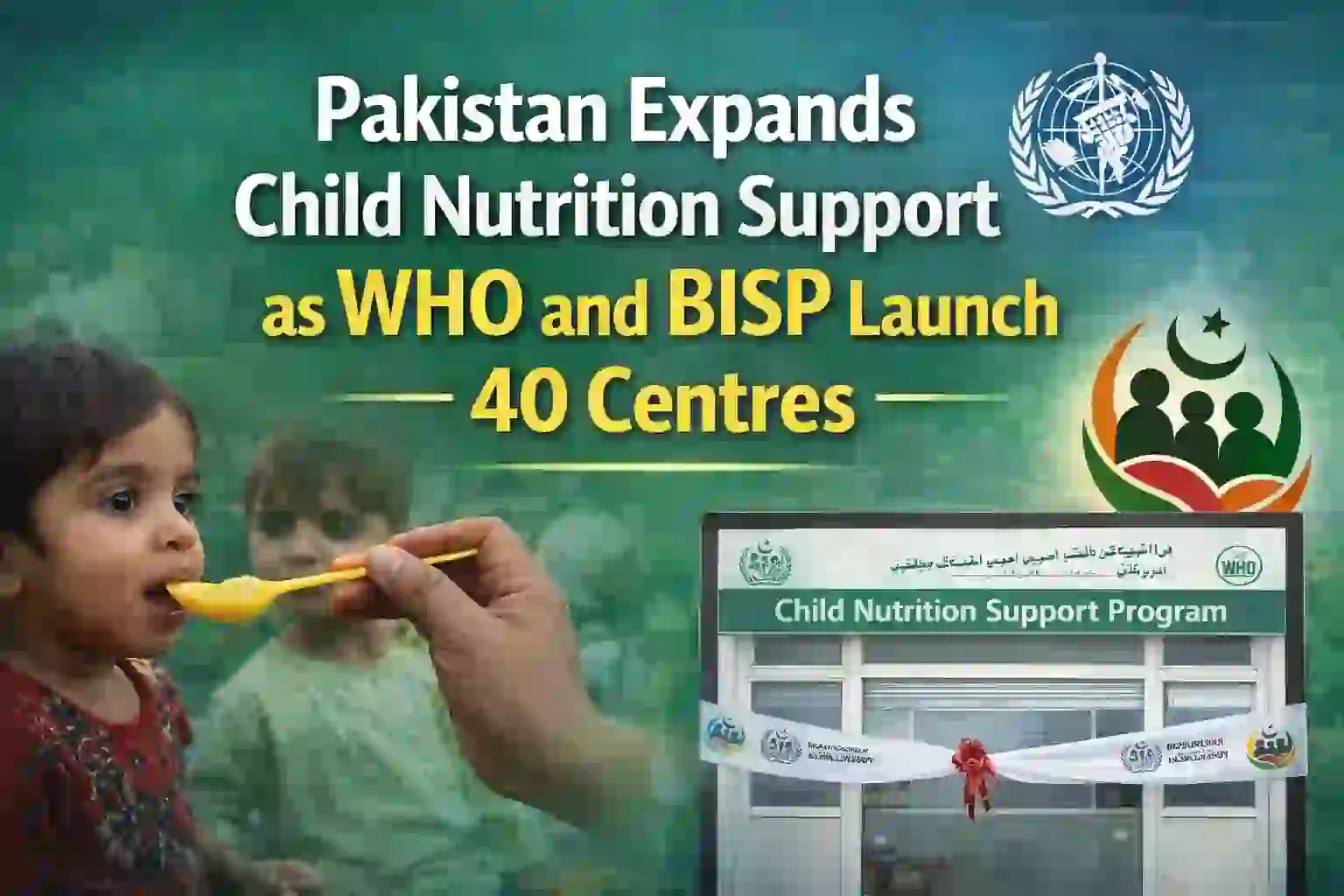
Pakistan has taken an important step toward improving public health and child welfare by expanding its national nutrition support system. In a major development, the World Health Organization (WHO) and the Benazir Income Support Programme (BISP) have partnered to launch 40 new child nutrition centres across Pakistan. This initiative aims to tackle the growing issue of child malnutrition and ensure that vulnerable families receive essential nutrition services.
The program focuses on providing treatment, monitoring, and nutritional education for mothers and children who are suffering from malnutrition or are at risk. With thousands of children in Pakistan facing undernutrition, stunting, and micronutrient deficiencies, the establishment of these centres is expected to significantly improve health outcomes for families who depend on government assistance programs.
This collaboration between WHO and BISP highlights the government’s commitment to strengthening social protection programs while addressing one of the most critical public health challenges in the country.
Pakistan Expands Child Nutrition Support Through WHO and BISP Partnership
The expansion of child nutrition support centres marks a major milestone in Pakistan’s efforts to reduce child malnutrition. The initiative is part of a broader strategy aimed at strengthening healthcare services for low income households.
The 40 newly launched centres will provide specialized nutrition services to mothers and children who are registered under the BISP program. These centres will operate in districts where malnutrition rates are higher and where families often struggle to access proper healthcare and nutrition support.
Through this partnership, WHO will provide technical expertise, training for healthcare workers, and support in monitoring and evaluation systems. BISP, on the other hand, will ensure that eligible families are connected with these nutrition services through its existing beneficiary network.
This collaborative approach allows both organizations to combine resources and expertise in order to reach communities that need help the most.

Why Child Nutrition Support is Important in Pakistan
Child malnutrition remains a serious challenge in Pakistan. According to national health reports, a significant percentage of children under five suffer from stunted growth due to chronic malnutrition.
Several factors contribute to this issue including:
- Poverty and food insecurity
- Limited access to healthcare services
- Lack of awareness about proper child nutrition
- Poor maternal health during pregnancy
- Inadequate breastfeeding and complementary feeding practices
Malnutrition not only affects physical growth but also impacts cognitive development and immunity. Children who suffer from severe malnutrition are more vulnerable to infections, learning difficulties, and long term health complications.
By expanding child nutrition support centres, Pakistan aims to provide early diagnosis and treatment so that affected children can recover and develop properly.
Key Services Offered at the New Child Nutrition Centres
The newly established nutrition centres will offer a wide range of services designed to support both children and mothers.
Nutrition Screening and Assessment
Healthcare professionals at the centres will conduct regular nutrition screenings for children. These assessments help identify early signs of malnutrition and allow timely treatment.
Treatment for Severe Acute Malnutrition
Children diagnosed with severe acute malnutrition will receive specialized therapeutic food and medical supervision. This treatment is critical in preventing life threatening complications.
Maternal Nutrition Counseling
Mothers will receive guidance on proper nutrition during pregnancy and breastfeeding. Educating mothers is a key step in preventing malnutrition among infants and young children.
Growth Monitoring Programs
Regular monitoring of child growth indicators such as height, weight, and body mass index will help healthcare workers track progress and adjust treatment plans.
Awareness and Education Sessions
The centres will also organize awareness sessions for families, focusing on healthy feeding practices, hygiene, and disease prevention.

Role of BISP in Strengthening Child Nutrition Programs
The Benazir Income Support Programme (BISP) is one of Pakistan’s largest social protection programs. It provides financial assistance to low income families across the country.
With millions of registered beneficiaries, BISP serves as an effective platform for delivering additional social services such as healthcare and nutrition support.
Through the launch of these nutrition centres, BISP is expanding its role beyond financial assistance and helping improve the overall wellbeing of families.
Beneficiary mothers who are registered with BISP can now access nutrition screening, treatment, and counseling services for their children at the designated centres. This integrated approach ensures that vulnerable families receive both economic support and health services.
WHO’s Contribution to Pakistan Child Nutrition Support Initiative
The World Health Organization (WHO) plays a critical role in strengthening healthcare systems around the world. In Pakistan, WHO has been actively supporting programs related to maternal and child health.
For the child nutrition centre initiative, WHO is providing:
- Technical guidance for nutrition treatment protocols
- Training for healthcare workers and nutrition specialists
- Monitoring and evaluation support
- Assistance in improving healthcare service delivery
By working closely with local health authorities and BISP, WHO ensures that the services provided at these centres meet international health standards.
This partnership helps improve the quality and effectiveness of nutrition programs while ensuring that vulnerable populations receive reliable healthcare support.
Expected Impact of the 40 Child Nutrition Centres
The launch of 40 new nutrition centres is expected to produce significant positive outcomes for children and families across Pakistan.
Some of the key expected benefits include:
- Early detection of child malnutrition
- Improved recovery rates for malnourished children
- Better maternal awareness about child nutrition
- Reduced risk of childhood diseases linked to malnutrition
- Stronger healthcare support systems in underserved communities
These centres will also help generate valuable health data that can guide future policy decisions and improve nutrition programs nationwide.
Government Commitment to Improving Child Health in Pakistan
The Government of Pakistan has increasingly prioritized programs that support maternal and child health. Initiatives like the BISP nutrition support program demonstrate a commitment to addressing both economic and health related challenges faced by vulnerable families.
In recent years, Pakistan has also worked with international organizations to improve vaccination programs, maternal healthcare services, and child development initiatives.
The expansion of child nutrition centres reflects the government’s broader goal of reducing malnutrition rates and ensuring healthier futures for the country’s younger generation.
Future Plans for Expanding Nutrition Support Programs
The launch of 40 centres is considered only the first phase of a larger plan to strengthen nutrition services across Pakistan.
Health experts and policymakers are exploring additional strategies such as:
- Expanding nutrition centres to more districts
- Increasing funding for maternal health programs
- Integrating nutrition services with primary healthcare facilities
- Enhancing digital monitoring systems for child health indicators
If successful, the program could serve as a model for other developing countries facing similar challenges in combating child malnutrition.
FAQs About Pakistan Child Nutrition Support Program
What is the purpose of the new child nutrition centres in Pakistan?
The centres are designed to provide nutrition screening, treatment, and counseling services for children suffering from malnutrition. They also educate mothers about proper feeding practices to prevent future health problems.
How many nutrition centres have been launched under the WHO and BISP initiative?
A total of 40 child nutrition centres have been launched across different districts in Pakistan to support vulnerable families.
Who can benefit from the BISP child nutrition support program?
Families who are registered under the Benazir Income Support Programme (BISP) and have children suffering from malnutrition or nutrition related health risks can benefit from the program.
What services are provided at these nutrition centres?
The centres offer nutrition screening, treatment for severe malnutrition, maternal counseling, child growth monitoring, and health awareness programs.
How does WHO support Pakistan’s nutrition programs?
The World Health Organization provides technical expertise, training for healthcare workers, and monitoring systems to ensure that nutrition services are delivered according to international health standards.
Why is child nutrition a major concern in Pakistan?
Many children in Pakistan face malnutrition due to poverty, limited access to healthcare, and lack of awareness about proper nutrition. Addressing these issues is essential for improving child health and development.