
Sindh Announces Farmers Wheat Support Subsidy Program March 2026
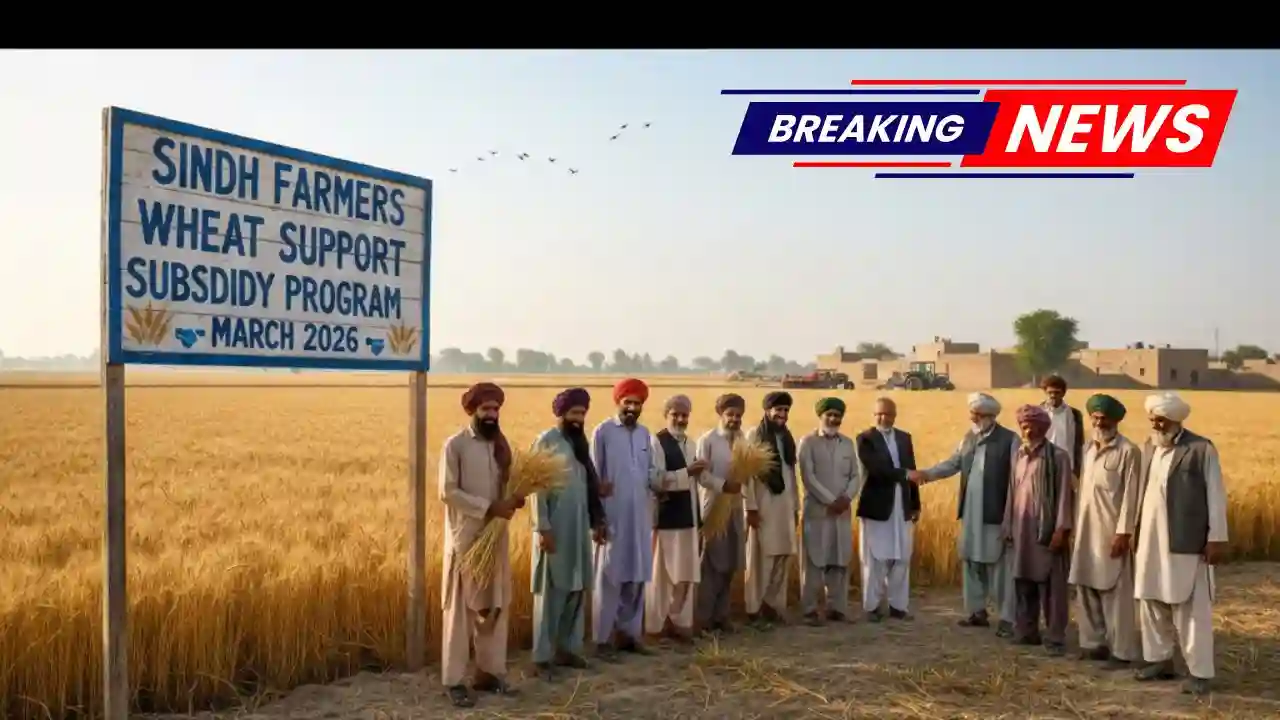
The Sindh Announces Farmers Wheat Support Subsidy Program March 2026, a major relief initiative aimed at supporting wheat growers across the province. This program comes at a critical time when farmers are facing rising input costs, climate challenges, and unstable market prices.
Wheat is Pakistan’s most important food crop, and Sindh plays a vital role in national wheat production. Through this subsidy program, the Sindh government aims to protect farmers’ income, ensure food security, and stabilize wheat supplies for the coming year.
Overview of Sindh Farmers Wheat Support Subsidy Program 2026
The Sindh Farmers Wheat Support Subsidy Program March 2026 is designed to provide financial relief and production support to small and medium-scale wheat farmers. The initiative focuses on compensating growers for increased costs of seeds, fertilizers, diesel, irrigation, and labor.
Under this program, eligible farmers are expected to receive direct financial assistance or input-based subsidies, helping them recover production costs and encouraging continued wheat cultivation in Sindh.
The program is being implemented in coordination with the Sindh Agriculture Department, district administrations, and relevant financial institutions.

Why the Wheat Support Subsidy Program Is Important
Wheat farming has become increasingly expensive over the past few years. Farmers face challenges such as:
- Rising fertilizer and seed prices
- Higher fuel and electricity costs
- Water shortages and climate variability
- Delays in procurement and price uncertainty
The Sindh Wheat Support Subsidy 2026 aims to reduce these pressures and ensure that farmers are not discouraged from growing wheat, which is essential for both farmer livelihoods and national food security.

Key Objectives of the Sindh Wheat Subsidy Program March 2026
The Sindh government has outlined several key goals for launching this subsidy initiative:
1. Financial Relief for Farmers
The program aims to reduce the financial burden on wheat growers by providing timely subsidies during or after the harvesting season.
2. Stabilization of Wheat Production
By supporting farmers, the government hopes to maintain or increase wheat production levels across Sindh.
3. Protection of Small Farmers
Special focus is placed on small and medium landholders who are most vulnerable to rising costs.
4. Strengthening Food Security
Ensuring stable wheat production helps control flour prices and protects consumers from food inflation.
5. Promoting Sustainable Agriculture
The subsidy also encourages better farming practices and continued investment in agriculture.

Who Is Eligible for the Sindh Farmers Wheat Support Subsidy?
Although final operational guidelines may vary by district, the general eligibility criteria include:
- Farmers must be residents of Sindh
- Ownership or tenancy of agricultural land used for wheat cultivation
- Registration with relevant agriculture or land record authorities
- Valid CNIC (Computerized National Identity Card)
- Proof of wheat cultivation during the 2025–26 season
Both landowners and registered tenant farmers are expected to benefit, provided they meet the verification requirements.

Expected Benefits of the Wheat Support Subsidy Program
The Sindh Wheat Subsidy Program 2026 offers multiple benefits to farmers and the agricultural economy:
Direct Financial Assistance
Eligible farmers may receive cash support per acre or per unit of wheat produced.
Reduced Production Costs
Subsidies help offset the cost of fertilizers, seeds, pesticides, and fuel.
Improved Farmer Confidence
Government backing reassures farmers and encourages continued wheat cultivation.
Economic Stability in Rural Areas
Increased farm income leads to better economic activity in rural communities.
Food Price Stability
Sustained wheat production helps keep flour prices under control for consumers.
How the Subsidy Is Expected to Be Distributed
The Sindh government plans to ensure transparent and efficient distribution through:
- Digital farmer databases
- Bank transfers to verified accounts
- Coordination with district agriculture offices
- Monitoring to prevent duplication or fraud
The use of technology is expected to minimize delays and ensure that support reaches deserving farmers without middlemen.
Role of the Sindh Agriculture Department
The Sindh Agriculture Department plays a central role in implementing the program. Its responsibilities include:
- Farmer registration and verification
- Data collection and land record checks
- Awareness campaigns across districts
- Coordination with banks and local administrations
- Monitoring subsidy disbursement
District-level agriculture offices are expected to assist farmers with registration and guidance.
Impact on Wheat Production and Food Security
Experts believe the Sindh Farmers Wheat Support Subsidy Program March 2026 could have a positive long-term impact by:
- Preventing a decline in wheat acreage
- Supporting consistent wheat output
- Reducing reliance on wheat imports
- Strengthening Pakistan’s food security framework
For Sindh, this program is also a step toward stabilizing the agricultural sector amid economic challenges.
Challenges and Areas for Improvement
While the program is promising, some challenges remain:
- Ensuring timely payments to farmers
- Accurate verification of land and crop data
- Inclusion of small tenant farmers
- Awareness in remote rural areas
Addressing these issues will be key to making the subsidy program successful and farmer-friendly.
Future Outlook of Wheat Subsidies in Sindh
The launch of the Wheat Support Subsidy Program 2026 signals a broader commitment by the Sindh government to strengthen agriculture. If implemented effectively, similar programs may continue in future years, expanding support to other crops and modern farming practices.
Conclusion
The Sindh Announces Farmers Wheat Support Subsidy Program March 2026 is a significant initiative aimed at protecting farmers, ensuring food security, and stabilizing wheat production in the province. By offering financial relief and reducing production risks, the program provides much-needed support to the backbone of Sindh’s rural economy.
For wheat farmers, this subsidy represents not just financial help, but also recognition of their role in feeding the nation.
Frequently Asked Questions (FAQs)
1. What is the Sindh Farmers Wheat Support Subsidy Program 2026?
It is a government initiative to provide financial and production support to wheat farmers in Sindh.
2. When was the wheat subsidy program announced?
The program was announced in March 2026.
3. Who can apply for the wheat subsidy in Sindh?
Eligible wheat farmers who cultivate land in Sindh and meet registration requirements can apply.
4. How will farmers receive the subsidy amount?
The subsidy is expected to be transferred through bank accounts or verified payment systems.
5. Why is the wheat subsidy important for Pakistan?
It helps protect farmers, stabilize wheat production, and ensure national food security.