
Rice Transplanter Subsidy Punjab 2025 – 60% Government Support
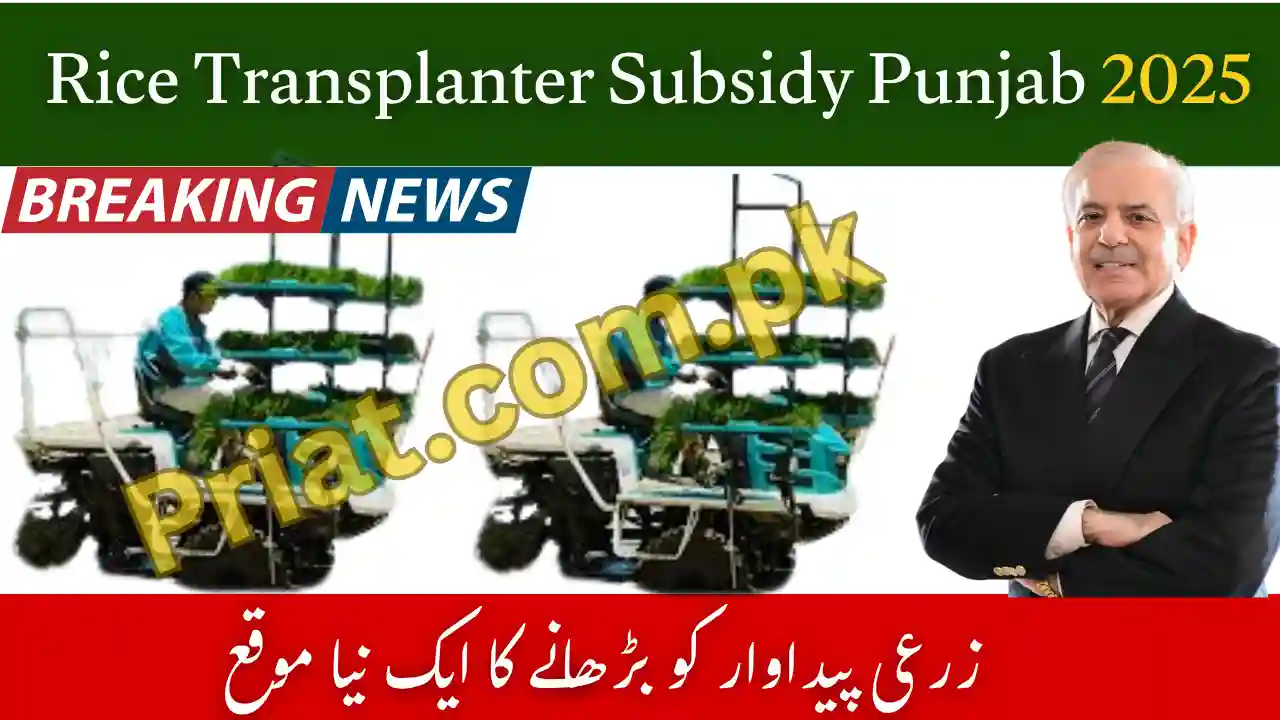
The Punjab Government is offering a significant opportunity for farmers to modernize their rice farming techniques with the Rice Transplanter Subsidy Punjab 2025. This initiative, which provides a 60% subsidy on the purchase of rice transplanters, is part of the government’s broader agricultural modernization efforts. In this article, we will explore the essential details of this subsidy, including eligibility criteria, benefits, application process, and frequently asked questions (FAQs). Farmers who adopt this scheme will not only benefit from reduced labor costs but also from improved crop yield and efficiency.
What is a Rice Transplanter?
A Rice Transplanter Subsidy Punjab 2025 is an advanced agricultural machine designed to transplant rice seedlings into the soil efficiently and uniformly. Unlike traditional manual transplantation, which is time-consuming and labor-intensive, the rice transplanter automates this process, saving valuable time and reducing human effort. The machine places rice seedlings at optimal distances, ensuring uniform growth and enhancing the overall productivity of rice crops.

Key Features and Benefits of a Rice Transplanter:
- Efficient Planting: Transplants rice seedlings at a rapid pace, saving both time and labor.
- Precision in Planting: Ensures accurate placement of seedlings, which improves germination rates and crop uniformity.
- Reduction in Labor Costs: Replaces the need for extensive manual labor, which can significantly reduce the cost of labor over time.
- Better Crop Yield: By ensuring uniform spacing, rice transplanters lead to healthier plants and higher yields, increasing overall productivity.
- Increased Sustainability: Reduces the environmental impact associated with labor-intensive, manual farming practices.
Read Also: Sugarcane Ridger Subsidy Punjab 2025

The Punjab Rice Transplanter Subsidy 2025: All You Need to Know:
The Rice Transplanter Subsidy Punjab 2025 provides farmers in Punjab with a 60% subsidy on the cost of purchasing a rice transplanter. This government initiative is designed to help farmers adopt modern farming techniques and ensure a more efficient and sustainable approach to rice cultivation. Through this program, the Punjab Government aims to alleviate the high costs associated with purchasing advanced agricultural machinery.

How the Subsidy Works:
- Subsidy Coverage: The government will cover 60% of the total cost of the rice transplanter. The remaining 40% must be paid by the farmer.
- Eligibility: This subsidy is available to farmers who meet the eligibility criteria outlined by the Punjab Agriculture Department. It aims to target small and medium farmers to improve productivity in the region.
Read More: Silage Baler Subsidy Punjab 2025

Eligibility Criteria for the Rice Transplanter Subsidy 2025:
To qualify for the Rice Transplanter Subsidy Punjab 2025, farmers must meet the following requirements:
- Domicile: Applicants must be permanent residents of Punjab.
- Landholding: Farmers must own or operate a farm with at least 5 acres of land under cultivation.
- Farmer Registration: Farmers must be registered with the Punjab Agriculture Department or an affiliated agricultural body.
- Application Process: Farmers must complete the online application process through the official Punjab Agriculture Department portal to be considered for the subsidy.
Step-by-Step Guide to Apply for the Rice Transplanter Subsidy Punjab 2025:
Applying for the Rice Transplanter Subsidy Punjab 2025 is a straightforward process. Below is a step-by-step guide to help farmers successfully apply for the subsidy:
- Visit the Official Punjab Agriculture Department Portal: Go to the official website of the Punjab Agriculture Department.
- Register as a Farmer: If you are not already registered, you must complete the registration process to become a recognized farmer.
- Select the Subsidy Scheme: Once registered, choose the Rice Transplanter Subsidy from the list of available subsidy schemes.
- Fill the Application Form: Provide your landholding details, contact information, and other required data in the application form.
- Upload Required Documents: Submit documents such as your CNIC, land records, and farmer registration certificate.
- Confirmation and Approval: After submitting your application, you will receive a confirmation message, and your application will be reviewed for approval.
Read Also: Sugarcane Planter Subsidy Punjab 2025
Subsidy Amount and Payment:
- Total Subsidy: The Punjab Government covers 60% of the cost of the rice transplanter.
- Farmer Contribution: The remaining 40% of the cost must be paid by the farmer.
- Payment Process: After approval, the farmer will be instructed on how to make the payment for the remaining portion of the cost.
Advantages of the Rice Transplanter Subsidy:
The Rice Transplanter Subsidy Punjab 2025 brings multiple benefits for farmers, including:
- Cost-Effective Farming: The 60% subsidy significantly reduces the cost of modernizing rice farming equipment, making it affordable for small and medium-scale farmers.
- Increased Productivity: By adopting modern technology, farmers can improve their crop yields with less effort and time.
- Enhanced Efficiency: Rice transplanters drastically reduce the time required for planting, allowing farmers to focus on other critical aspects of farming.
- Labor Savings: Reducing the dependence on manual labor not only cuts costs but also lessens the strain on laborers.
- Sustainable Practices: The subsidy promotes the adoption of environmentally-friendly farming technology, which reduces soil erosion and enhances land sustainability.
FAQs on the Rice Transplanter Subsidy Punjab 2025:
1. What is the Rice Transplanter Subsidy?
The Rice Transplanter Subsidy is a government scheme that offers a 60% discount on the purchase of rice transplanters for eligible farmers in Punjab.
2. How much subsidy will I receive?
Farmers will receive 60% of the cost of the rice transplanter, with the remaining 40% to be paid by the farmer.
3. How do I apply for the subsidy?
Farmers can apply online through the Punjab Agriculture Department’s official portal by registering and filling out the application form.
4. What documents are required to apply?
Applicants need to submit their CNIC, land records, and farmer registration certificate.
5. Who is eligible for the Rice Transplanter Subsidy?
Farmers who are residents of Punjab, own at least 5 acres of land, and are registered with the Punjab Agriculture Department are eligible.
6. What is the deadline for applying?
The application deadline will be announced by the Punjab Agriculture Department, so farmers are advised to check the official portal regularly.
7. Is the subsidy applicable to used rice transplanters?
The subsidy is generally for new rice transplanters. Farmers should check with the Punjab Agriculture Department for any exceptions.
8. How long will the approval process take?
The approval process typically takes a few weeks. Farmers will be notified via SMS or email about the status of their application.
9. Can I apply if I am not registered with the Punjab Agriculture Department?
No, registration with the Punjab Agriculture Department is a prerequisite for applying for the subsidy.
10. Will the subsidy cover the entire cost of the rice transplanter?
No, the subsidy covers 60% of the cost, and the remaining 40% must be paid by the farmer.
Conclusion A Step Toward Modernizing Rice Farming in Punjab:
The Rice Transplanter Subsidy Punjab 2025 is a crucial initiative by the government to help farmers in Punjab transition to modern and efficient farming techniques. By offering a 60% subsidy, the government aims to reduce the financial barriers associated with the adoption of advanced agricultural machinery. This scheme not only promises to enhance productivity but also contributes to more sustainable, cost-effective, and modern rice farming in the region. Farmers who meet the eligibility criteria are encouraged to apply and take advantage of this beneficial scheme.